Hibachi Style Seared Scallops
Highlighted under: Global Flavors
I absolutely love making Hibachi Style Seared Scallops at home! The perfectly seared crust, combined with the tender and juicy scallops, creates a delightful culinary experience. I tend to whip this dish up for special dinners or when I want to impress my guests with minimal effort. The flavors are elevated with just a few simple ingredients, allowing the natural taste of the scallops to shine. Whether you're new to cooking seafood or a seasoned chef, this dish is sure to become a favorite in your kitchen.
When I first tried Hibachi Style Seared Scallops at a Japanese steakhouse, I was blown away by the incredible flavors. I knew I had to try making them at home, and after a few attempts, I finally nailed it! The secret is to ensure that the pan is hot enough before adding the scallops, which creates that irresistible crust while keeping them tender inside.
One detail that really makes a difference is using high-quality scallops. Freshness is key! I also love adding a touch of sesame oil at the end of cooking for an extra layer of flavor. Give it a try, and I promise you won't regret it!
Why You'll Love This Recipe
- Quick and easy gourmet meal in under 20 minutes
- Deliciously seared for a perfect texture
- Elevated flavors with just a few ingredients
Mastering the Sear
Achieving the perfect sear on your scallops is crucial for a delightful texture. The pan must be preheated until the oil is shimmering but not smoking—this indicates that it’s ready for the scallops. If the oil is too cool, the scallops will release moisture instead of searing properly, leading to a rubbery texture. Look for a golden crust as the scallops cook; this can take about 2-3 minutes on each side.
Don’t overcrowd the pan! If your skillet isn’t large enough, sear the scallops in batches to ensure they cook evenly. When you add the scallops, resist the urge to move them around; they need that time uninterrupted to form a solid crust. Using a good-quality non-stick pan can also help prevent sticking and make flipping easier.
Ingredient Interaction
Each ingredient in this recipe plays a vital role in enhancing the natural sweetness of the scallops. The vegetable oil serves as a high smoke point cooking fat, providing heat without burning, while the unsalted butter adds richness and a hint of nuttiness. Be mindful to use unsalted butter; this allows you to control the overall saltiness, which is especially important given the soy sauce later on.
The soy sauce and sesame oil not only contribute flavor but also help in creating a glossy finish on the scallops. They add umami depth that beautifully complements the sweet and slightly briny taste of sea scallops. By tossing them with the scallops at the end of cooking, you integrate these flavors without losing their potency while also creating a flavorful sauce to coat the dish.
Ingredients
Gather the following ingredients for the best Hibachi Style Seared Scallops:
Ingredients
- 12 large sea scallops
- 2 tablespoons vegetable oil
- 1 tablespoon unsalted butter
- 1 tablespoon soy sauce
- 1 teaspoon sesame oil
- Salt and pepper to taste
- Chopped green onions for garnish
Make sure to use fresh scallops for optimal flavor!
Instructions
Follow these steps to prepare your Hibachi Style Seared Scallops:
Prepare the Scallops
Pat the scallops dry with paper towels and season both sides with salt and pepper.
Heat the Pan
In a large skillet, heat the vegetable oil over medium-high heat until shimmering.
Sear the Scallops
Add the scallops to the pan in a single layer. Cook without moving them for 2-3 minutes until nicely browned.
Flip and Finish
Carefully flip the scallops and add the butter. Cook for another 2-3 minutes until cooked through.
Add Seasonal Flavor
Drizzle soy sauce and sesame oil over the scallops. Toss gently to combine.
Serve
Garnish with chopped green onions and enjoy your Hibachi Style Seared Scallops!
Serve immediately for the best flavor and texture.
Pro Tips
- For an even deeper flavor, marinate the scallops in soy sauce for 15 minutes before cooking.
Serving Suggestions
Hibachi Style Seared Scallops can be beautifully plating them over a bed of jasmine or basmati rice, which absorbs the delicious sauce and balances the dish. For added color and nutrition, consider serving alongside sautéed green vegetables, such as snap peas or bok choy, tossed lightly in the same soy and sesame oil mix to tie flavors together.
For a fresh twist, serve the scallops on top of a simple salad with mixed greens, sliced cucumbers, and a sesame vinaigrette. The bright acidity of the salad will contrast nicely with the rich scallops, creating a well-rounded meal.
Storage and Reheating
Leftover scallops can be stored in an airtight container in the refrigerator for up to two days. However, be aware that reheating may cause them to become rubbery due to their delicate texture. To gently reheat, place them in a skillet over low heat for just a few minutes, or microwave in short bursts at 50% power until warmed—this will help maintain their tenderness.
If you want to make this recipe ahead of time, I recommend cooking only the scallops, and then preparing the soy and sesame drizzle just before serving. This way, you can keep the scallops at their best texture while still enjoying the dish quickly on a busy night.
Variations and Substitutions
If scallops are not available or you're looking for a different flavor profile, this technique can easily be adapted using shrimp or firm white fish like halibut or cod. Just adjust the cooking time depending on the thickness of the seafood; shrimp will generally cook quicker, while fish may take a little longer at lower heat to ensure it cooks through without drying out.
For a gluten-free version, substitute tamari for the soy sauce, and feel free to experiment with different oils. Avocado oil is an excellent alternative with a high smoke point and a neutral flavor, allowing the scallops' sweetness to shine without competing flavors.
Questions About Recipes
→ Can I use frozen scallops?
It's best to use fresh scallops, but if using frozen, ensure they are properly thawed and patted dry before cooking.
→ What should I serve with scallops?
These scallops pair well with steamed vegetables, rice, or a light salad.
→ How do I know when scallops are done cooking?
Scallops are done when they are opaque and firm to the touch; they should not be rubbery.
→ Can I make this dish in advance?
It's best to cook scallops just before serving, as they are best enjoyed fresh.
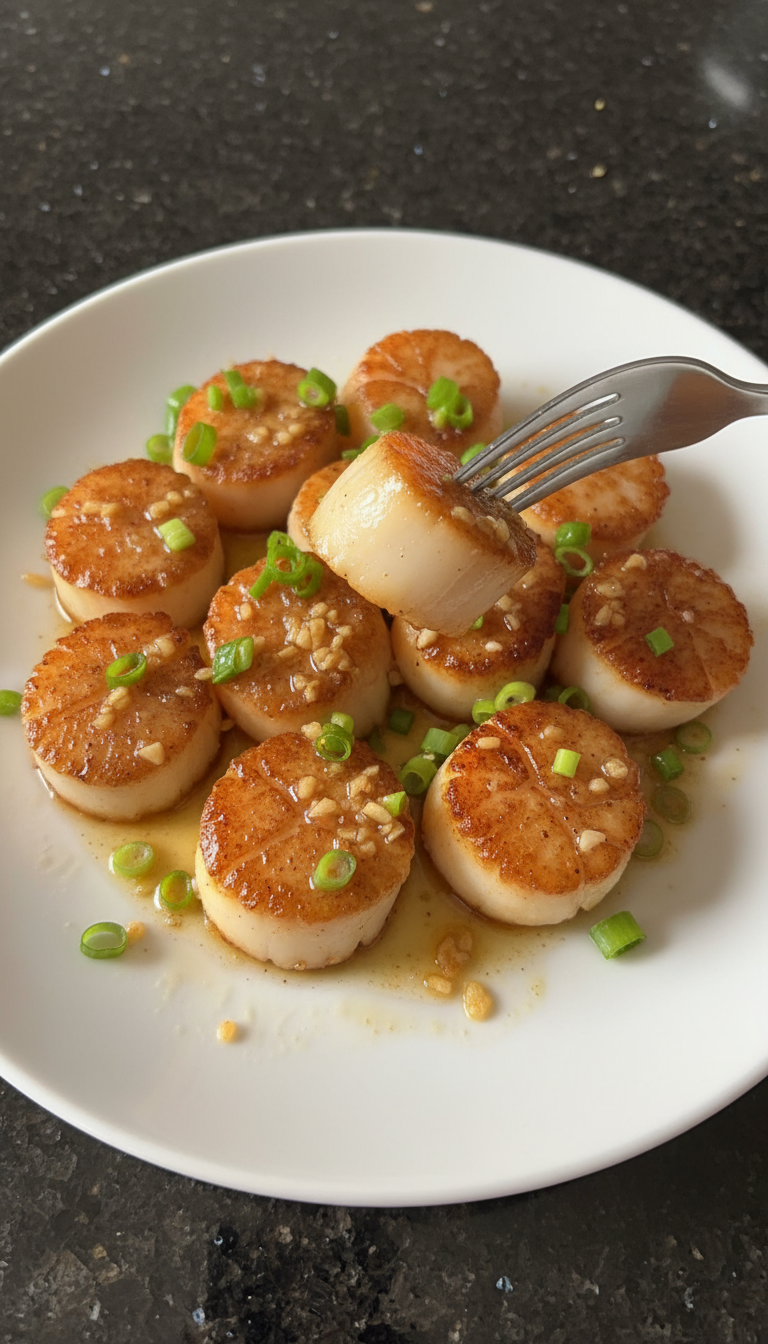
Hibachi Style Seared Scallops
Created by: The Novarecipelab Team
Recipe Type: Global Flavors
Skill Level: Intermediate
Final Quantity: Serves 2
What You'll Need
Ingredients
- 12 large sea scallops
- 2 tablespoons vegetable oil
- 1 tablespoon unsalted butter
- 1 tablespoon soy sauce
- 1 teaspoon sesame oil
- Salt and pepper to taste
- Chopped green onions for garnish
How-To Steps
Pat the scallops dry with paper towels and season both sides with salt and pepper.
In a large skillet, heat the vegetable oil over medium-high heat until shimmering.
Add the scallops to the pan in a single layer. Cook without moving them for 2-3 minutes until nicely browned.
Carefully flip the scallops and add the butter. Cook for another 2-3 minutes until cooked through.
Drizzle soy sauce and sesame oil over the scallops. Toss gently to combine.
Garnish with chopped green onions and enjoy your Hibachi Style Seared Scallops!
Extra Tips
- For an even deeper flavor, marinate the scallops in soy sauce for 15 minutes before cooking.
Nutritional Breakdown (Per Serving)
- Calories: 240 kcal
- Total Fat: 14g
- Saturated Fat: 7g
- Cholesterol: 40mg
- Sodium: 560mg
- Total Carbohydrates: 3g
- Dietary Fiber: 0g
- Sugars: 0g
- Protein: 25g